
Ragdoll in Singapore: A Complete Guide for First-Time Owners
Ragdoll cat Singapore care, demystified: temperament, HDB suitability, grooming, shedding in our heat, lifespan and the health checks that truly matter.
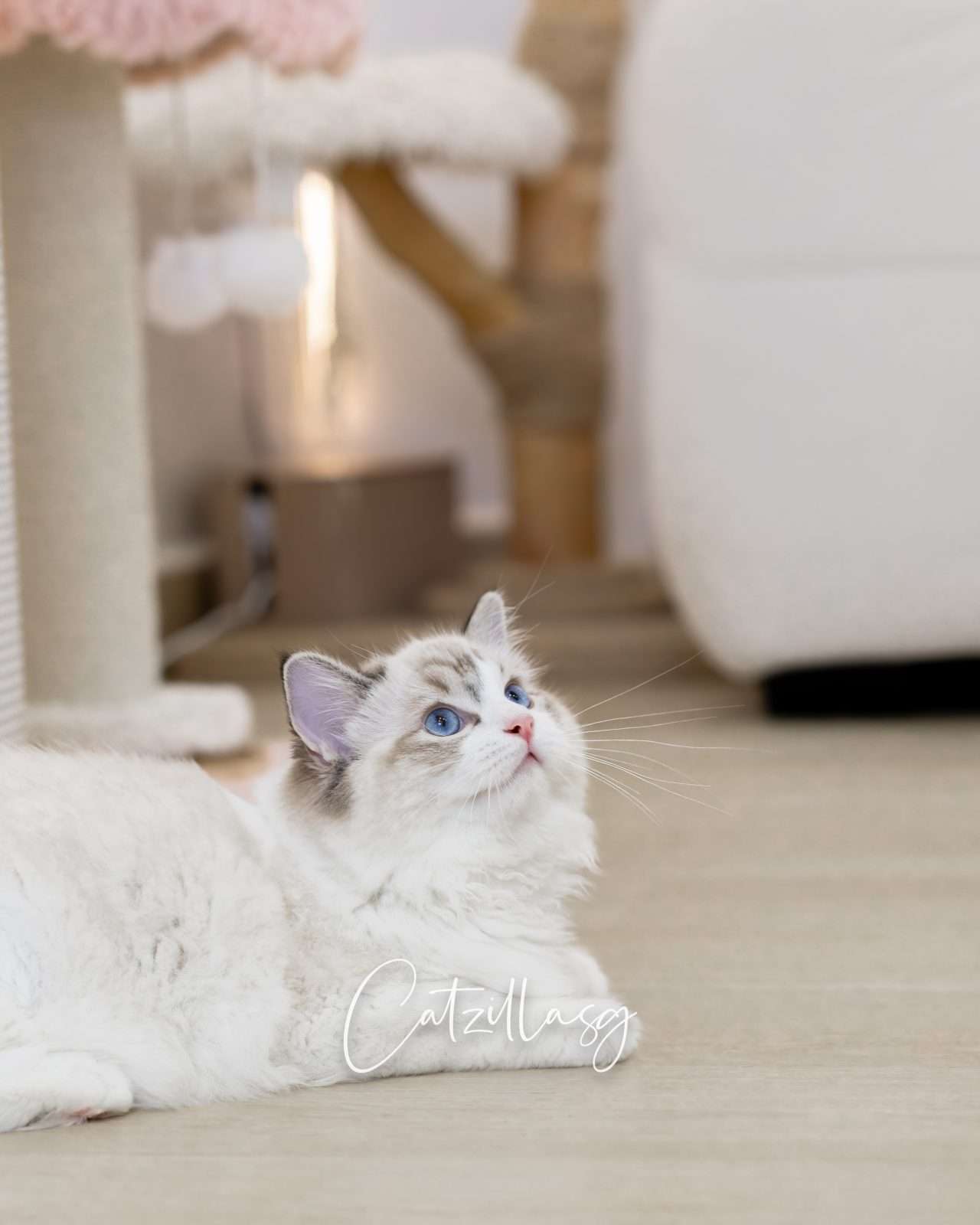
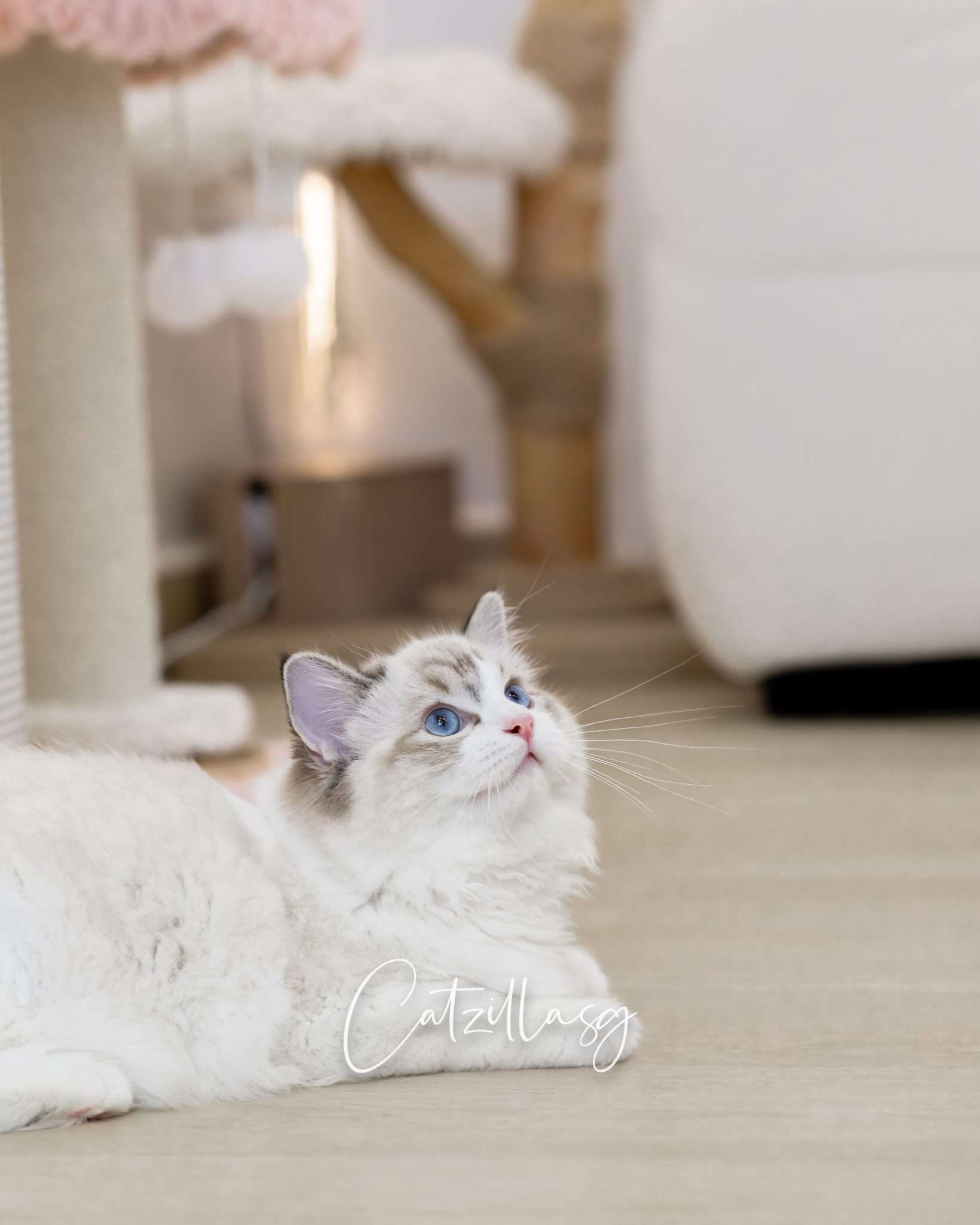
If you have ever met a Ragdoll, you already know the feeling: you reach down to pick one up and the whole cat softens into your arms, limbs loose, eyes half-closed, utterly trusting. That signature flop is exactly how the breed earned its name — and it is the single best clue to what life with a Ragdoll cat Singapore families adore really looks like. Over the past few years we have watched this gentle, dog-like breed quietly become one of the most requested cats at our cattery, second only to our golden-shaded British Shorthairs. But a Ragdoll is a longhaired companion living in a tropical, high-rise city, and thriving here takes a little local know-how. This is the care and temperament guide we wish every first-time owner had before bringing one home.
What life with a Ragdoll cat in Singapore really involves
- Temperament: affectionate, placid, dog-like — they follow you everywhere and dislike being left alone.
- Climate: a semi-long coat in our heat and humidity means air-conditioning and steady grooming are non-negotiable.
- Grooming: 3–4 brushings a week keeps the coat mat-free; armpits, belly and behind the ears tangle first.
- HDB-friendly: yes — calm, indoor-loving and well suited to flat living, and the breed is on HDB’s approved cat list.
- Lifespan: a healthy Ragdoll lives roughly 12–17 years, maturing slowly over three to four years.
- Health: always confirm parents are HCM and PKD DNA-tested — a Ragdoll-specific must.
In this article8 sections
- The Ragdoll temperament: built for companionship
- Are Ragdoll cats good for HDB flats in Singapore?
- Ragdoll cat Singapore care: built around our climate
- Ragdoll lifespan and health: what to verify
- How much does a Ragdoll cat cost in Singapore?
- The first weeks at home
- Frequently asked questions
- Join the waitlist
The Ragdoll temperament: built for companionship
The Ragdoll’s defining trait is its disposition. Bred in California in the 1960s for docility and size, these cats are placid, people-oriented and remarkably tolerant — many will come when called, trot to the door to greet you, and settle across your keyboard the moment you sit down to work. Their voices are soft, their movements unhurried. Where some breeds prize independence, the Ragdoll temperament is openly, unapologetically affectionate.
They are also slow to mature. Most Ragdolls do not reach their full frame and coat until three to four years old. A six-month-old still reads as a kitten; a fully grown male can comfortably reach 6.8–9 kg (females 4.5–6.8 kg) and feel like a small dog draped across your lap. That gentle, low-drama nature is precisely why they suit households with children, seniors, or first-time owners who want a cat that meets them halfway.
A Ragdoll does not just tolerate your company — it actively seeks it. They want you, and that is the whole point of the breed.
Are Ragdoll cats good for first-time owners?
In a word, yes — they are one of the most forgiving breeds a newcomer can choose. They are slow to startle, rarely aggressive, and adapt well to handling, which makes the everyday rituals of nail trims, brushing and vet visits far easier than with a flightier cat. The one genuine caveat is emotional rather than practical: a Ragdoll bonds hard, so the breed rewards owners who are home often and struggles with long, solitary days. If your flat is empty twelve hours a day, plan for a companion — a sibling kitten is the classic solution.
Are Ragdoll cats good for HDB flats in Singapore?
This is the most common question we hear about the Ragdoll cat Singapore owners increasingly choose, and the honest answer is that it is one of the best cat breeds for an HDB flat. They are calm, indoor-loving and not natural climbers or escape artists; a Ragdoll is far happier flopped on a cool floor than scaling your curtains. Crucially, the breed sits comfortably within HDB’s framework — cats can now be kept in HDB flats under the approved-cat scheme, and the placid Ragdoll is exactly the temperament that scheme was designed around.
Make a small flat feel large for a Ragdoll by going vertical: a cat tree or a couple of wall shelves give them a cool perch and a sense of territory without taking up floor space. They will use it to supervise you — their favourite job.
What they do need is enrichment and your presence. A Ragdoll left alone in a quiet flat all day will pine more than most breeds. Interactive play, a window with a view, and a predictable routine matter far more to this cat than square footage does.
Ragdoll cat Singapore care: built around our climate
Here is where local expertise earns its keep. The Ragdoll’s semi-long, silky coat is its glory — plush, low-undercoat, and slower to mat than most longhaired breeds. But “slower to mat” is not “easy in the tropics.” Singapore’s heat and damp air can knot that coat within a week of neglect, and a longhaired cat simply carries more insulation than our climate was built for.
Ragdolls cope with heat worse than shorthaired cats. Open-mouth panting, lethargy, pressing themselves to cool tiles, or going off their food are warning signs. Move them to a cooler room straight away — and see a vet if it does not pass quickly.
In practice, comfortable Ragdoll cat Singapore care comes down to four daily habits:
- Air-conditioning is non-negotiable. A cool retreat room is the minimum; many of our families run the AC through the hottest afternoon hours every day.
- Brush three to four times a week, not once. Pay close attention to the armpits, belly and behind the ears — the first places to tangle.
- Sanitary trims around the rear every four to six weeks keep litter hygiene manageable on a long coat.
- Multiple water stations, or a pet fountain. Ragdolls drink more than people expect, and dehydration in this climate is a real risk.
Ragdoll grooming in Singapore: the routine that works
You do not need a salon every fortnight — you need consistency. A few minutes of brushing several times a week beats one frantic detangling session. Reach for three tools: a quality slicker brush to lift loose hair, a fine-toothed metal comb to find tangles before they become mats, and a gentle deshedding tool for the seasonal shed. Together they cost less than a single professional grooming and prevent almost every matting problem we see. Because Ragdolls are so handleable, grooming becomes a bonding ritual rather than a wrestling match — start it in kittenhood and they will lean into it for life.
Do Ragdoll cats shed a lot in Singapore’s hot weather?
Ragdolls shed moderately — less than you might fear for a longhaired cat, because they carry little dense undercoat. The twist in our climate is that there is no real “winter,” so instead of two dramatic seasonal moults, you get steady, year-round shedding nudged along by air-conditioning cycling the indoor temperature. The fix is the same either way: regular brushing captures loose hair before it lands on your sofa, and a deshedding tool during heavier weeks keeps it in check. Worth noting for allergy-conscious buyers — no cat is truly hypoallergenic, and the Ragdoll is not a low-allergen breed.
| Care factor | What Singapore owners should plan for |
|---|---|
| Coat type | Semi-long, silky, low undercoat — elegant but needs upkeep |
| Grooming | Brush 3–4× weekly; sanitary trim every 4–6 weeks |
| Shedding | Moderate, year-round (no seasonal break in our climate) |
| Climate needs | Air-conditioned retreat; multiple water sources |
| Temperament | Placid, affectionate, dislikes being left alone |
| HDB suitability | Excellent — calm, indoor, on the approved-cat list |
| Lifespan | Typically 12–17 years with good care |
Ragdoll lifespan and health: what to verify
Ragdolls are a robust breed, and a well-bred Ragdoll cat Singapore families bring home will share your life for 13 to 18 years. But there is one genetic concern every serious cattery must screen for, and one or two worth knowing about:
- Hypertrophic Cardiomyopathy (HCM) — Ragdolls carry a known breed-specific mutation (MYBPC3) detectable by DNA test. This is the single most important result to verify before you commit to a kitten.
- Polycystic Kidney Disease (PKD) — less common in Ragdolls than in British Shorthairs, but still worth confirming both parents are clear.
- Feline Mucopolysaccharidosis (MPS VI) — rare, but present in some lines; responsible breeders screen for it.
At our cattery, the parents of every Ragdoll kitten we place are DNA-tested for HCM and PKD, and we hand over written proof on collection day alongside full vaccination records, microchip registration and a lifetime health guarantee. As an AVS-licensed, SME500-recognised cattery, we also hold kittens to 12–16 weeks before they go home — the breed matures slowly, and those extra weeks with mum make for steadier, better-socialised cats. If a seller cannot show you health paperwork or will not let you meet the mother, treat that as your answer.
A suspiciously cheap “pedigree” Ragdoll, photos in place of in-person visits, vague answers about HCM testing, or “papers coming later” are all classic backyard-breeder signals. With a slow-maturing, longhaired breed, the cost of cutting corners shows up later — in health bills and heartbreak.
How much does a Ragdoll cat cost in Singapore?
We keep specific pricing to private conversation, because a healthy Ragdoll’s cost reflects what goes into it: DNA-tested parents, AVS-licensed facilities, vaccinations, microchipping, weeks of early socialisation and a health guarantee that stands behind the kitten for life. Think in terms of value and lifetime care rather than a single sticker number — and budget for the ongoing realities too: premium food, litter, routine vet care, and the longhair-specific grooming kit. For a full breakdown of what to expect before you buy, see our companion guides on the things to know before you get a Ragdoll and where to buy a Ragdoll in Singapore, then browse our Ragdoll kittens in Singapore page.
The first weeks at home
Thanks to their social nature, Ragdolls usually settle faster than other breeds — but every kitten is an individual. Set up a quiet room with litter, food, water, a hiding spot and a soft bed, and let them come to you rather than forcing interaction. Keep them on whatever the cattery has been feeding for the first couple of weeks, then transition gradually if you want to switch; Ragdolls tend to eat fast, so a slow-feeder bowl helps prevent regurgitation. Book a baseline vet check within two weeks, ideally with a clinic experienced in longhaired breeds and HCM monitoring — some Singapore vets fold cardiac screening into the annual exam, which is well worth it for this breed.
Frequently asked questions
Are Ragdoll cats good for HDB flats in Singapore?
Yes — they are among the best breeds for HDB living. Ragdolls are calm, indoor-loving and not prone to escaping, and cats can be kept in HDB flats under the approved-cat scheme. Give them a cool perch, daily play and your company, and a flat suits them perfectly.
What is the temperament of a Ragdoll cat?
Placid, affectionate and famously dog-like. Ragdolls follow their people from room to room, greet you at the door, rarely show aggression and go limp when picked up. The trade-off is that they dislike being left alone for long stretches.
Do Ragdoll cats shed a lot in Singapore’s hot weather?
They shed moderately. With little dense undercoat, Ragdolls shed less than many longhaired cats, but our climate means it is steady and year-round rather than seasonal. Brushing 3–4 times a week keeps loose hair under control.
How often should you groom a Ragdoll cat in Singapore?
Brush three to four times a week, focusing on the armpits, belly and behind the ears where mats start. Add a sanitary trim around the rear every four to six weeks. Consistency matters more than the occasional salon visit.
Are Ragdoll cats good for first-time owners?
Very — they are gentle, tolerant of handling and slow to startle, which makes grooming and vet care easy for newcomers. Just be sure you are home enough; a Ragdoll bonds closely and does best in a household that is not empty all day.
How long do Ragdoll cats live?
A healthy, well-bred Ragdoll typically lives 13 to 18 years. They mature slowly over three to four years, and DNA-tested parents plus good preventive care give them the best shot at a long, healthy life.
Meet a Ragdoll in person
We are an AVS-licensed, SME500-recognised Singapore cattery raising healthy, beautifully socialised Ragdoll and British Shorthair kittens — all from HCM and PKD DNA-tested parents, with a lifetime health guarantee and meet-the-mum visits. Come see the temperament for yourself.