
British Shorthair Golden Shaded: Colours, Rarity & Why They Cost More
Golden shaded British Shorthair Singapore guide: the green-eye standard, golden vs chinchilla vs silver, why they're so rare, and the real cost factors.
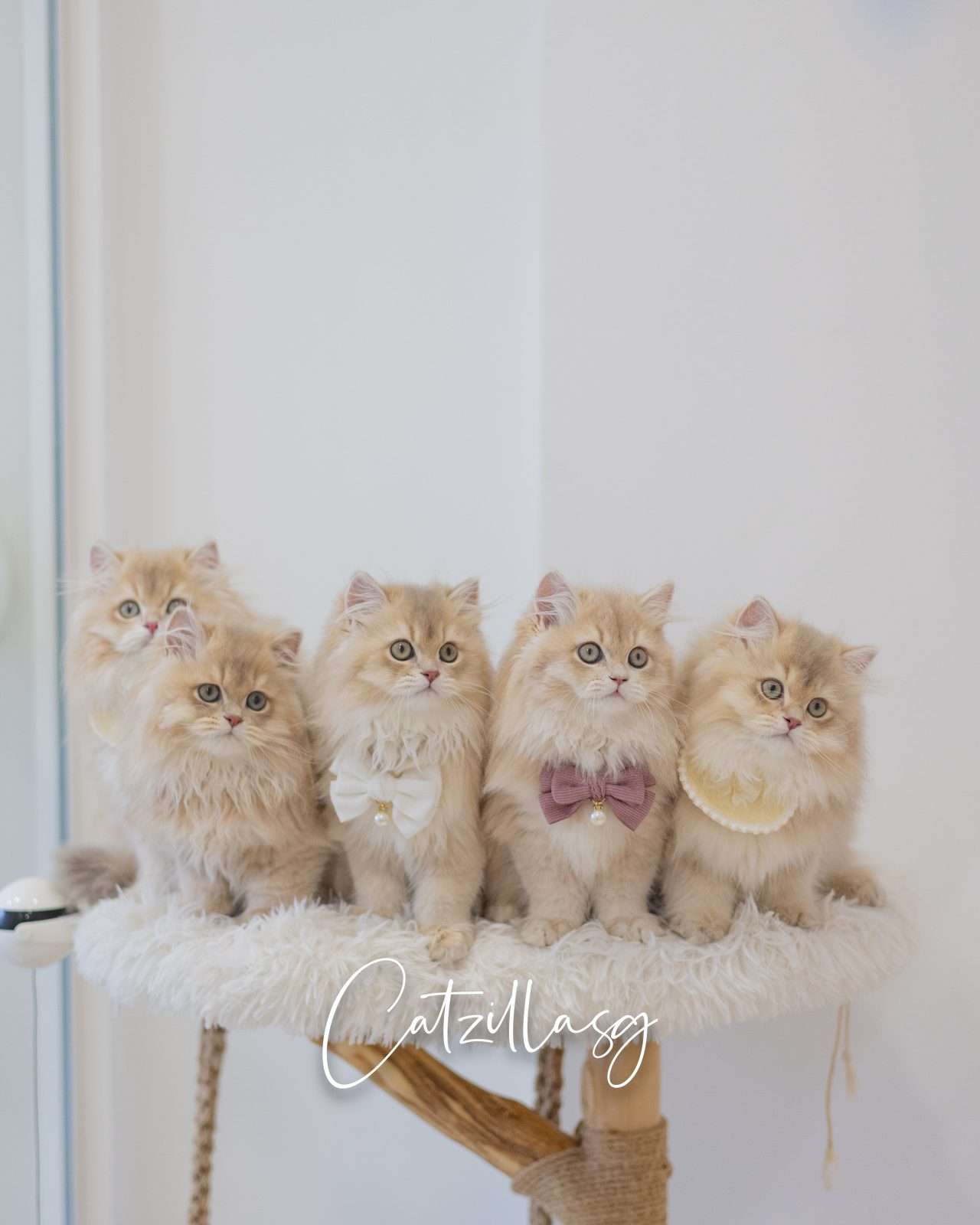
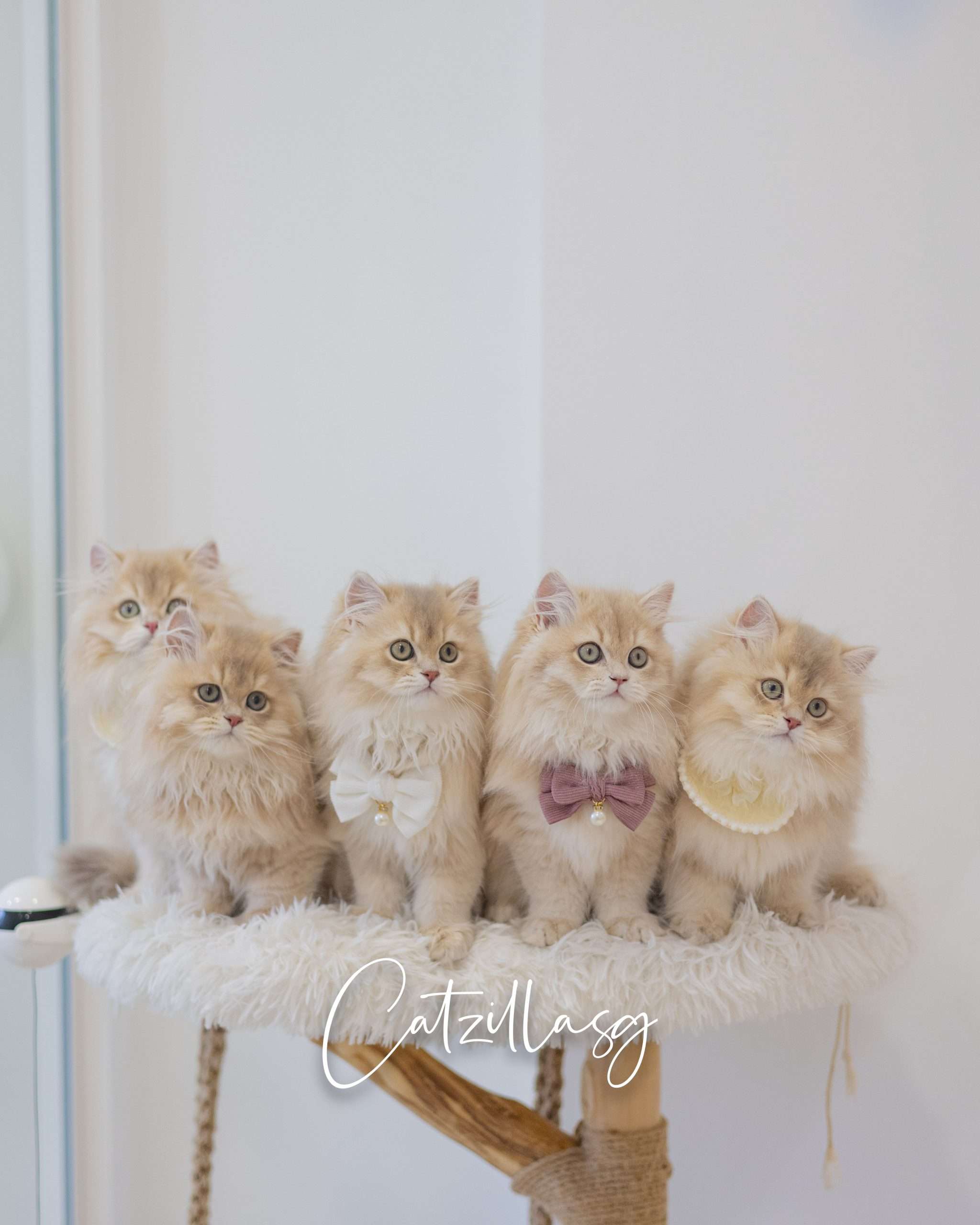
Of all the coats we are asked for at our cattery, none turns heads like the golden shaded British Shorthair — and in Singapore that demand has become a phenomenon. The golden shaded British Shorthair Singapore buyers covet is a luminous, warm-toned cat: dark-tipped guard hairs shimmer over a glowing apricot-gold undercoat, the whole coat seeming to catch light as the cat moves, finished with dramatic green eyes outlined as if with kohl. It is also one of the rarest, most premium colours the breed produces, because the genetics behind that glow are genuinely difficult to breed true. As an AVS-licensed cattery that specialises in this exact colour, here is everything we wish every buyer knew before they fell in love.
The golden shaded British Shorthair, in brief
- A tipped coat — a warm golden undercoat with darker-coloured tips, plus the signature dark-rimmed green eyes.
- Comes in blue, lilac, cinnamon and black golden shaded (black golden carries the registry code BS11); blue golden is the most requested.
- Rare and premium because the golden gene and the shaded pattern must both express cleanly in one kitten — supply is tiny, SG demand is high.
- Cost is driven by genetics, health testing, bloodline and rarity, not a fixed sticker — we never publish kitten prices.
- Care is the same as any British Shorthair: a weekly brush keeps the shimmer; air-con suits them perfectly.
In this article11 sections
- What exactly is a golden shaded British Shorthair?
- Do golden British Shorthairs have green eyes?
- The golden shaded colour family
- Golden shaded vs golden chinchilla British Shorthair
- Silver shaded vs golden shaded British Shorthair
- Why golden British Shorthairs are so rare and expensive
- How much does a golden shaded British Shorthair in Singapore cost?
- Living with a golden shaded in Singapore
- Where can I buy a golden shaded British Shorthair in Singapore?
- Golden shaded British Shorthair: your questions answered
- Join the waitlist
What exactly is a golden shaded British Shorthair?
A golden shaded British Shorthair has what breeders call a “tipped” coat. Each individual hair is a warm golden colour at the root and shades to a darker tip along roughly the top eighth of its length, so the cat appears to glow from within and ripple with depth whenever it moves. This is the opposite of a solid colour like a classic blue British Shorthair, where every hair is one flat shade root to tip. The shaded pattern gives that signature shimmer, and it is paired with a face that looks beautifully made-up: a brick-red nose, dark lips and the famous dark-pencilled eyes. The total effect reads as luxurious and slightly regal — which is exactly why the golden British Shorthair Singapore families ask us for, again and again, is the one with this glow.
The first time you see a golden shaded in natural light, you understand the obsession. Photographs flatten it; the cat itself appears lit from inside.
Do golden British Shorthairs have green eyes?
Yes — and it is part of the standard, not a happy accident. In a correctly bred golden shaded (and its cousin the golden chinchilla), the breed standard calls for green eyes, ideally a deep sea-green or gooseberry green, ringed by dark skin that makes the colour pop like a jewel. This green-eye requirement is one of the things that separates a true golden from a near-miss. Kittens are born with the usual baby-blue, which shifts through neutral grey and then settles into green between roughly three and twelve months. Copper or orange eyes can appear when the line carries other colour genetics, but for the textbook golden British Shorthair green eyes are the gold standard — literally. When you view one of our golden-shaded kittens, eye colour is one of the first things we will point out, because it is a genuine marker of a well-bred cat.
Green eyes, a dark “eyeliner” rim, a brick-red nose outlined in the tipping colour, and tipping that sits evenly on the back, head and tail while the chin, chest and tummy stay pale gold. That combination is the hallmark of a real golden shaded.
The golden shaded colour family
“Golden shaded” is not a single colour but a small family, defined by the colour of the tipping that sits over the golden base coat. Blue is the runaway favourite in Singapore; the rarer tippings are the ones serious collectors chase.
| Colour | The look | Rarity |
|---|---|---|
| Blue Golden Shaded | Soft blue-grey tipping over warm gold — the classic, most-requested look in SG | Sought-after |
| Lilac Golden Shaded | Dove-grey tipping with a pinkish, frosted tone | Rarer |
| Cinnamon Golden Shaded | Warm reddish-brown tipping — unusual and striking | Very rare |
| Black Golden Shaded (BS11) | Black tipping over a rich gold base — the highest-contrast, most dramatic version | Rare |
Among the rarer British Shorthair colours Singapore breeders work with, these golden variants sit at the very top. The deeper the tipping (a black golden shaded is more dramatic than a fully pale golden chinchilla) the more of the coat’s colour is on display — which brings us to a question we field constantly.
Golden shaded vs golden chinchilla British Shorthair
People use these terms interchangeably, but to a breeder they describe two points on the same scale. The difference is simply how much of each hair carries the darker tipping colour:
Golden Shaded
Tipping covers roughly the top third of each hair. The cat reads as visibly darker and more contrasty across the back and head, with the gold glowing through underneath.
Golden Chinchilla (Shell)
Tipping covers only the very tip — about the top eighth. The cat looks paler, more champagne, almost dusted with gold rather than coated in it.
So in the golden shaded vs golden chinchilla British Shorthair question, neither is “better” — chinchilla is the lighter, more ethereal end and shaded is the richer, deeper end. Both demand green eyes and the same dark-rimmed face. The choice is purely aesthetic, and once you have seen both in person it usually picks itself.
Silver shaded vs golden shaded British Shorthair
The other comparison buyers weigh is silver versus gold. They share an identical tipped pattern — same shimmer, same dramatic eyes — but the base coat differs completely. A silver shaded sits on a cool white-silver undercoat; a golden shaded sits on a warm apricot-gold undercoat.
| Silver Shaded | Golden Shaded | |
|---|---|---|
| Undercoat | Cool white-silver | Warm apricot-gold |
| Overall feel | Crisp, icy, moonlit | Warm, glowing, sunlit |
| Eyes | Green or blue-green | Green (often deeper) |
| Availability | More available | Rarer & more premium |
Is a golden or silver shaded British Shorthair better? Honestly, it comes down to whether you want a cat that looks like moonlight or one that looks like sunlight. Silver is cooler and more readily available; golden is warmer, scarcer and commands the higher premium. Neither is objectively superior — but in Singapore, golden is the one that sells out first.
Why golden British Shorthairs are so rare and expensive
Producing a beautiful golden shaded kitten is one of the harder things to do well in this breed, and that difficulty is the whole story behind the price. The golden colour and the shaded tipping each rely on specific, interacting genetics, and getting both to express cleanly — in the same kitten, alongside good coat density, correct green eyes and proper British Shorthair “type” (that round face and cobby body) — takes years of careful pairing. Even from two excellent golden parents, only a portion of a litter will hit show-quality colour. Layer on HCM and PKD health testing, championship import bloodlines, and the simple fact that demand in Singapore far outstrips the handful of correctly-bred kittens available, and you have a coat that naturally sits at the premium end of the breed.
If you are quoted a suspiciously low price for a “golden” kitten, be careful. A genuinely golden shaded from health-tested parents cannot be produced cheaply. Bargain “goldens” are often pale tabbies sold under a fancier name, or kittens from unlicensed backyard breeders with no health screening. Always ask to see the AVS licence, the parents, and HCM/PKD test results.
How much does a golden shaded British Shorthair in Singapore cost?
We are asked this every week, and we will always answer it the honest way rather than with a misleading single number. We do not publish kitten prices, because the price of a golden shaded British Shorthair Singapore-wide is set by a stack of real factors, not a fixed tag. What actually moves the figure:
- Colour & tipping clarity — a clean, evenly-tipped golden shaded with the correct green eyes sits above a washed-out one.
- Rarity of the variant — cinnamon and lilac golden are scarcer than blue golden.
- Bloodline & pedigree — championship import lines cost more to bring in and breed.
- Health testing — HCM and PKD screening of parents, full vaccinations, microchip and vet checks all carry real cost (and protect you).
- Breeder standards — an AVS-licensed cattery raising kittens to a 12–16 week handover with socialisation and a lifetime health guarantee is a different product entirely from a backyard litter.
For the full breakdown of how British Shorthair pricing works across colours, see our dedicated guide on how much a British Shorthair costs in Singapore. For golden specifically, the most accurate answer is the one we give in person: come and meet a kitten, see the parents, and we will talk you through exactly what you are paying for.
Living with a golden shaded in Singapore
The reassuring part: once that rare coat is on your sofa, caring for a golden shaded British Shorthair in Singapore is no harder than for any other British Shorthair. A quick weekly brush with a soft slicker lifts the dead undercoat and keeps the plush, tipped coat clean — which is precisely what keeps the golden shimmer looking its best. They are calm, dignified, indoor-loving cats that suit HDB flats and condos beautifully and genuinely enjoy our air-conditioning; the cool, dry indoor air keeps that dense double coat comfortable in Singapore’s humidity. Keep them on a good-quality diet, keep fresh water flowing, keep them cool, and the coat and those outlined green eyes will stay striking for life.
Their thick coat means they feel the heat. A consistently cool, air-conditioned room and a shaded resting spot away from afternoon sun keep a golden British Shorthair comfortable year-round — and the coat looking its plush best.
Where can I buy a golden shaded British Shorthair in Singapore?
Because they are genuinely rare, a golden shaded is best sourced from an AVS-licensed British Shorthair cattery Singapore buyers can actually visit — one that will show you health-tested parents, let you meet the mum, and let you see the kitten in person, because the glow really does have to be seen to be believed. At CatzillaSG, golden shaded is our specialty, not a sideline: we focus on blue, lilac and cinnamon golden British Shorthairs from championship import bloodlines, with HCM/PKD-tested parents, a 12–16 week handover, and a lifetime health guarantee. We are an SME500 cattery with 150+ five-star Google reviews. Browse who is here now on our available kittens page, or read the full British Shorthair breed guide to go deeper on temperament, care and colours.
Golden shaded British Shorthair: your questions answered
How much does a golden shaded British Shorthair cost in Singapore?
There is no single price — it depends on the tipping clarity, the rarity of the variant, the bloodline, and the health testing behind the kitten. Golden shaded sits at the premium end of the breed because it is hard to breed correctly. We do not publish figures; the most accurate guidance comes from meeting a specific kitten and its parents in person.
Why are golden British Shorthairs so rare and expensive?
The golden colour and the shaded tipping each depend on specific genetics that must both express cleanly in the same kitten, alongside correct green eyes, coat quality and breed type. Only a portion of any litter hits show-quality golden, supply in Singapore is tiny, and demand is high — so the colour commands a premium.
What is the difference between golden shaded and golden chinchilla British Shorthair?
It is the amount of tipping on each hair. Golden chinchilla (shell) is tipped only at the very tip, so the cat looks pale and champagne-dusted. Golden shaded carries tipping further down the hair, so the cat looks richer and more contrasty. Both require green eyes and the dark-rimmed face; the choice is purely aesthetic.
Do golden British Shorthairs have green eyes?
Yes. The breed standard for golden shaded and golden chinchilla calls for green eyes — ideally a deep sea-green — ringed by dark skin. Kittens are born blue-eyed and settle into green between about three and twelve months. Green eyes are a genuine marker of a correctly bred golden.
Is a golden or silver shaded British Shorthair better?
Neither is objectively better — they share the same tipped pattern but differ in base colour. Silver sits on a cool white-silver undercoat (crisp and moonlit) and is more available; golden sits on a warm gold undercoat (glowing and sunlit) and is rarer and more premium. It comes down to whether you prefer moonlight or sunlight.
Where can I buy a golden British Shorthair kitten in Singapore?
From an AVS-licensed cattery that lets you visit, meet the mum and see HCM/PKD-tested parents. CatzillaSG specialises in golden shaded British Shorthairs from championship bloodlines. Check our available kittens page for current arrivals, or book a viewing to see one in person.
See a golden shaded in person
The shimmer of a golden shaded British Shorthair genuinely has to be seen to be believed. Visit our AVS-licensed Singapore cattery, meet the mum, and let us show you exactly what makes this colour so special.