
Before You Get a Ragdoll Cat: 9 Things to Know First
The honest things to know before getting a Ragdoll cat Singapore: HDB suitability, heat, grooming, HCM health screening, cost factors and breeder tips.
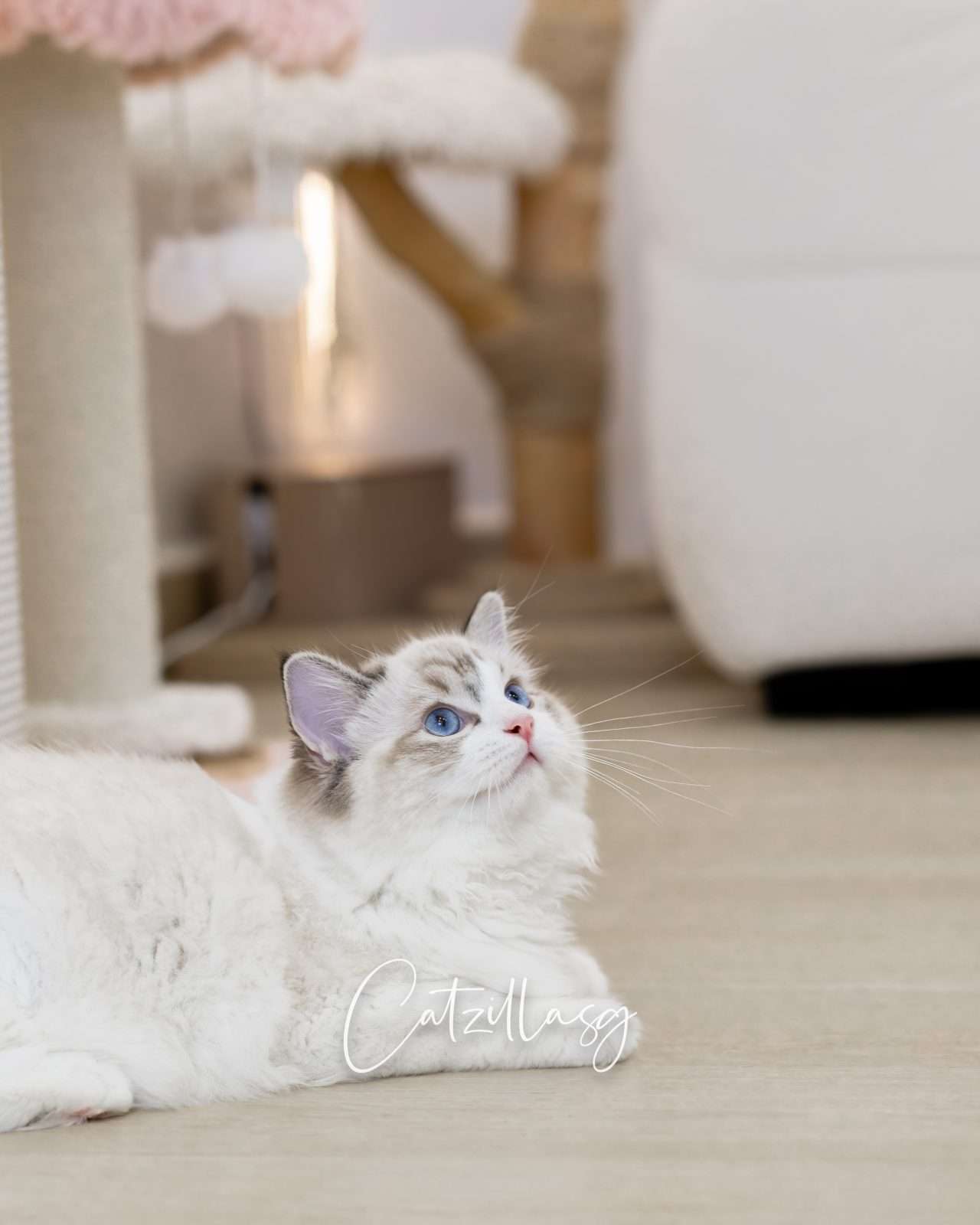
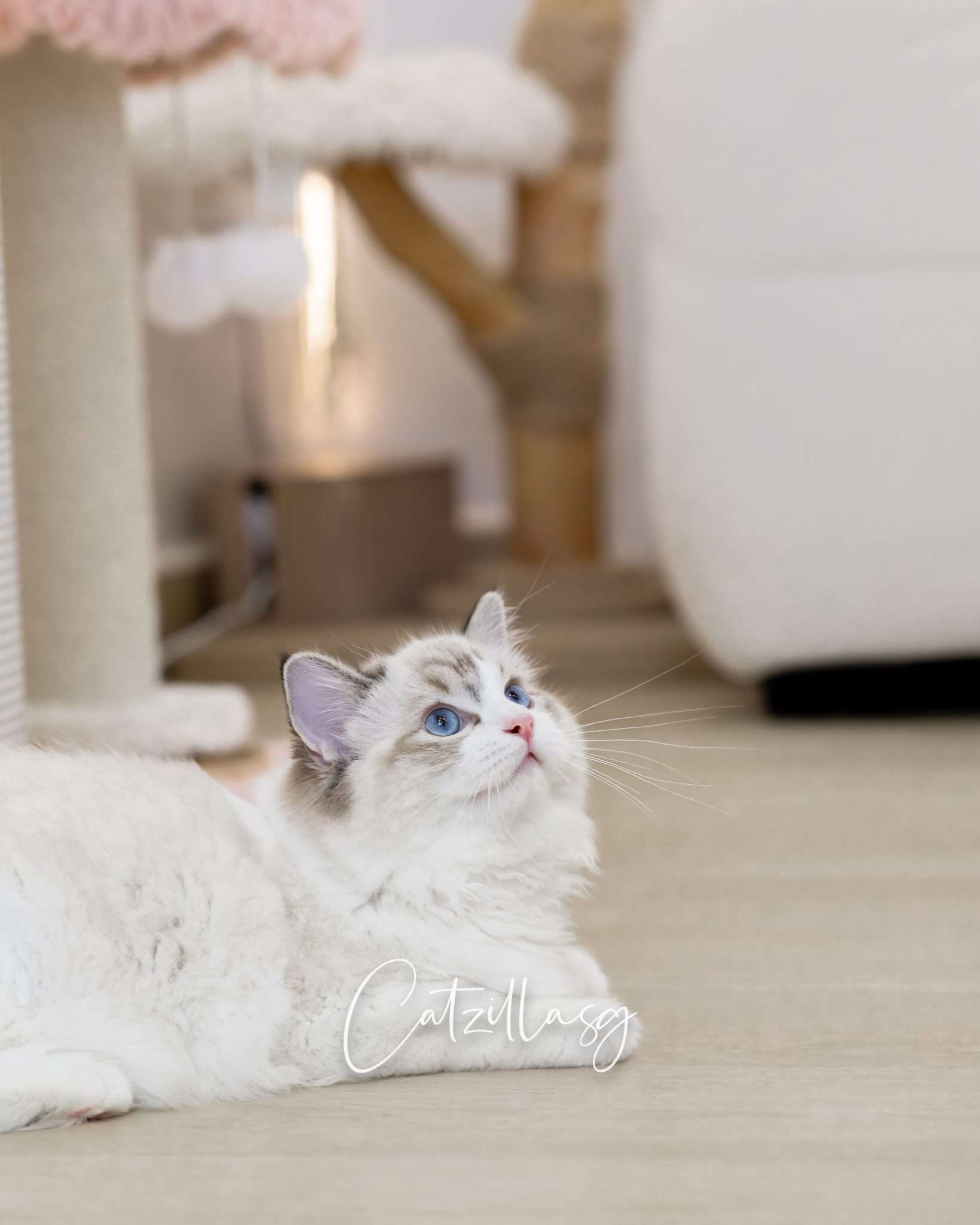
If you are weighing the things to know before getting a Ragdoll cat Singapore families ask us about most, start here: the Ragdoll is one of the gentlest, most people-bonded breeds you can welcome home — calm, soft-voiced, famously content to go limp in your arms. But that softness comes with responsibilities most first-time owners never anticipate, from semi-long-coat care in our humidity to a heart condition that quietly runs in the breed. We run an AVS-licensed cattery in Singapore and we have placed enough Ragdolls into HDB flats and condos to know exactly where new owners stumble. This guide is the honest version we wish every family read before they fell in love.
The short version before you commit
- Temperament first: the Ragdoll cat is bred for a calm, dog-like personality — ideal for HDB flats and first-time owners.
- They grow big and slowly: full size at 3–4 years, with males reaching 6.8–9 kg.
- Heat and humidity matter: a semi-long coat in Singapore means aircon comfort and a real grooming routine.
- Health screening is non-negotiable: insist on HCM- and PKD-tested parents — this is where a “cheap” kitten hides its real cost.
- It is a 12–17 year decision: choose a reputable Ragdoll breeder in Singapore and prepare your home before the kitten arrives.
In this article13 sections
- Ragdoll cat temperament: bred for one thing above all
- Are Ragdoll cats suitable for HDB flats?
- Do Ragdoll cats handle Singapore’s heat?
- Ragdoll cat grooming in Singapore: gentler than it looks, but non-optional
- Ragdoll size: they grow much bigger than you expect
- Health flags: HCM, PKD and urinary care
- A Ragdoll is an indoor cat — always
- How much does a Ragdoll cat cost in Singapore?
- A 12–17 year decision: lifespan and commitment
- The first 48 hours: prepare before the kitten arrives
- How do I find a reputable Ragdoll breeder in Singapore?
- Frequently asked questions
- Join the waitlist
Ragdoll cat temperament: bred for one thing above all
Most cat breeds were shaped by climate, work, or looks. The Ragdoll was shaped by personality. Developed in 1960s California by Ann Baker, the breed standard prizes a calm, people-loving temperament above coat or colour. A well-bred Ragdoll does not dart, hiss, or hide — they greet you at the door, trail you from room to room, flop onto your lap, and stay. The name itself comes from the way a relaxed Ragdoll goes boneless when you pick them up.
If you have ever lived with a high-energy, vocal breed, a Ragdoll feels like a different species: soft-spoken, slow to startle, almost dog-like in how they attach to their people. For households with young children, gentle seniors, or first-time cat owners, that temperament is half the value of the breed — and the main reason Ragdolls settle so well into Singapore homes. It is the first of the things to know before getting a Ragdoll cat: you are choosing a shadow, not an ornament.
A Ragdoll does not just tolerate your company — they organise their whole day around it.
Trying to decide between two of our most-loved breeds? Read our side-by-side guide: British Shorthair vs Ragdoll — temperament, size, grooming, and which suits your home.
Are Ragdoll cats suitable for HDB flats?
Yes — and this is one of the most common questions we field. Ragdolls are low-energy indoor cats with no urge to roam, which makes them genuinely well-suited to HDB flats and condos. They are not climbers who need acres or sprinters who bounce off walls; they are companion cats who want to be near you. A three-room flat with a cat tree, a couple of perches, and your company is plenty.
Two practical Singapore notes. First, cats are now permitted in HDB flats under the licensing framework that began phasing in — keep your paperwork in order as the rules formalise. Second, Ragdolls are trusting to a fault, so balcony and window safety is essential in high-rise living.
Never leave a Ragdoll with access to an open window or unmeshed balcony. Their non-defensive nature means they will not sense the danger of a ledge. Invisible-grille or mesh netting is the single most important purchase for a Singapore high-rise.
Do Ragdoll cats handle Singapore’s heat?
This is where the breed’s origins meet our climate. The Ragdoll is a semi-long-haired cat developed in temperate California — they are built for comfort, not for the tropics. Most Ragdolls in Singapore live very happily, but only in homes that manage temperature and humidity. An aircon or well-ventilated, fan-cooled room during the hottest part of the day keeps them comfortable; fresh water in multiple spots keeps them hydrated. You will notice your Ragdoll seeking out the coolest tile in the flat — that is normal heat-seeking-in-reverse behaviour.
Humidity is the second half of the story, and it leads straight into grooming.
Ragdoll cat grooming in Singapore: gentler than it looks, but non-optional
Good news first: the Ragdoll’s silky coat has relatively little undercoat, so it mats far less than a Persian or Maine Coon. A weekly comb-through with a fine-tooth steel comb is usually enough to keep it glossy and tangle-free. But Singapore’s humidity changes the maths. Damp, warm air encourages the coat to clump, especially in the high-friction zones — behind the ears, the armpits, the “trousers” at the back legs, and the belly.
| Area | Routine in Singapore |
|---|---|
| Full-body comb | Weekly; every other day during the twice-yearly shed |
| Mat-prone spots (armpits, ruff, trousers) | Quick daily check — humidity makes these clump fastest |
| Bath | Roughly monthly; always blow-dry fully to avoid damp-coat matting |
| Nails, ears, eyes | Trim/clean every 2–3 weeks |
Are Ragdoll cats high maintenance to groom? Not really — but never let a Ragdoll air-dry after a bath in humid weather. A half-dry semi-long coat is exactly how the worst mats form. Towel, then blow-dry on a low, warm setting until the undercoat is fully dry.
Ragdoll size: they grow much bigger than you expect
The Ragdoll is a slow-maturing breed. Where most cats reach adult size by twelve months, a Ragdoll keeps filling out until three to four years old. Adult males commonly weigh 6.8–9 kg and females 4.5–6.8 kg — noticeably heavier than a domestic shorthair, and often larger than a British Shorthair. Plan your kit for the adult, not the kitten: a sturdy cat tree rated for big cats, an oversized litter box, and a full-size carrier you will not outgrow in six months.
Health flags: HCM, PKD and urinary care
If you remember one thing from this guide, make it this. The single most important question to ask any Ragdoll breeder is whether the parents are screened for HCM (Hypertrophic Cardiomyopathy) — a heritable heart condition the breed is prone to. Responsible breeders test breeding cats annually by echocardiogram with a feline cardiologist, and run genetic PKD testing too. Ragdolls can also be prone to lower urinary tract issues, so a wet-leaning diet and plentiful water stations are sensible lifelong habits.
A Ragdoll advertised well below market usually means a corner was cut — most often the genetic screening. We have sat with too many families nursing a kitten through a heart or urinary crisis that proper parent-testing would have flagged. If a breeder cannot show you HCM and PKD certificates, walk away. A cheap kitten is rarely cheap in the end.
Every CatzillaSG Ragdoll comes from HCM- and PKD-tested parents and is backed by a lifetime congenital health guarantee, with handover at 12–16 weeks once the kitten is fully vaccinated, litter-confident, and socialised.
A Ragdoll is an indoor cat — always
The Ragdoll’s trusting, non-defensive nature is precisely why they must stay indoors for life. They will not flee a threat, react to a dog, or read traffic; a Ragdoll will stroll up to a stranger like an old friend. In Singapore that means no unsupervised balcony, no open high-rise windows, and harness-and-leash only for any outdoor time. The AVS and every responsible breeder are unanimous: Ragdolls are indoor companions.
How much does a Ragdoll cat cost in Singapore?
Of all the things to know before getting a Ragdoll cat Singapore buyers underestimate, price tops the list — so let us be honest about it. We do not publish fixed figures here, because the real answer is that price reflects what went into the kitten, and the absence of shortcuts. When you compare quotes, you are really comparing these cost factors:
- Champion-bloodline parents, usually imported, with the airfare and paperwork that entails
- Annual HCM and PKD screening of every breeding cat
- AVS-licensed cattery overheads and proper veterinary care
- Full vaccination, deworming, and microchipping before handover
- Documented, registered pedigree (TICA, CFA, WCF, or ANCATS)
- Weeks of in-home socialisation before the kitten ever leaves
A bargain Ragdoll almost always means one of those was skipped. The vet bills that follow routinely eclipse the upfront saving — so think in terms of value over a 12–17 year life, not sticker price. Read our cattery’s story on why we refuse the shortcuts.
A 12–17 year decision: lifespan and commitment
A healthy, well-bred Ragdoll lives twelve to seventeen years. That is a genuine commitment across moves, family changes, finances, and time. Ragdolls bond deeply and do not rehome well — they grieve separation. If you are not certain, we would rather you wait; our waitlist stays open for whenever the timing is right, with no pressure to commit before you are sure.
The first 48 hours: prepare before the kitten arrives
Ragdolls are calmer than most breeds, but the first two days in a new home still matter. Before pickup, set up the litter box, food and water, scratchers, and a quiet decompression corner away from foot traffic. Keep the aircon room ready, introduce family members slowly, and resist the urge to invite the whole neighbourhood over on day one. A Ragdoll that feels safe in week one becomes the confident, lap-loving cat you came for.
Decompression corner
One calm room with litter, water, and a hideaway box for the first 48 hours.
Cool comfort
An aircon or fan-cooled space and multiple fresh-water stations.
Grooming kit
A fine-tooth steel comb plus a dryer for post-bath humidity.
How do I find a reputable Ragdoll breeder in Singapore?
Where your Ragdoll comes from is the single biggest predictor of whether they thrive — the most important of all the things to know before getting a Ragdoll cat in Singapore. Before you commit to any cattery, ask these five questions, and walk away from any vague answer:
- Are you AVS-licensed, and may I see the certificate?
- Are both parents HCM and PKD screened — when was the last echo?
- Can I visit and meet the mum before I commit?
- Are the pedigrees genuinely registered with a breed association?
- Do you provide a written health guarantee?
We built our process around exactly these questions: AVS-licensed, SME500-recognised, with golden-shaded specialty bloodlines, meet-the-mum visits, and a lifetime health guarantee. For the full buying walkthrough, see where to buy a Ragdoll cat in Singapore, or browse our Ragdoll kittens in Singapore.
Frequently asked questions
How much does a Ragdoll cat cost in Singapore?
We do not publish fixed prices, because cost reflects what went into the kitten: imported champion bloodlines, annual HCM and PKD screening, AVS-licensed care, full vaccination, and a registered pedigree. Compare those factors rather than the lowest number — a suspiciously cheap Ragdoll usually means screening was skipped, and the later vet bills outweigh the saving.
Are Ragdoll cats suitable for HDB flats?
Very much so. Ragdolls are low-energy, indoor-loving companion cats with no urge to roam, which suits HDB flats and condos well. Provide a cat tree, a few perches, and your company — and secure all windows and balconies, since their trusting nature makes high-rise safety essential.
Can Ragdoll cats handle Singapore’s hot weather?
Yes, in a climate-managed home. As a semi-long-haired breed from a temperate climate, Ragdolls need an aircon or fan-cooled space during the hottest hours and constant access to fresh water. You will see them seeking cool tile floors — that is normal and healthy.
Are Ragdoll cats high maintenance to groom?
Less than people fear. Their silky, low-undercoat coat mats far less than a Persian’s, and a weekly steel-comb session usually suffices. Singapore’s humidity is the catch — check the armpits, ruff, and back-leg “trousers” often, and always fully blow-dry after a bath to prevent damp-coat matting.
What should I know before buying a Ragdoll kitten in Singapore?
Confirm the parents are HCM and PKD tested, that the cattery is AVS-licensed, and that you can meet the mum and see registered pedigrees. Expect handover at 12–16 weeks, budget for a 12–17 year commitment, and prepare your home — cool room, grooming kit, and a quiet first-48-hours corner — before the kitten arrives.
How do I find a reputable Ragdoll breeder in Singapore?
Ask for the AVS licence, recent HCM and PKD certificates, registered pedigrees, a meet-the-mum visit, and a written health guarantee. Any vagueness is a red flag. A reputable Ragdoll breeder in Singapore will welcome every one of these questions.
Ready to meet one? Browse the Ragdoll kittens for sale in Singapore right now.
The best way to know is to meet one
Bring the family to our AVS-licensed Singapore cattery — hold a Ragdoll kitten, meet the mum, and ask every question on this list. We would love to help you decide the right way.