
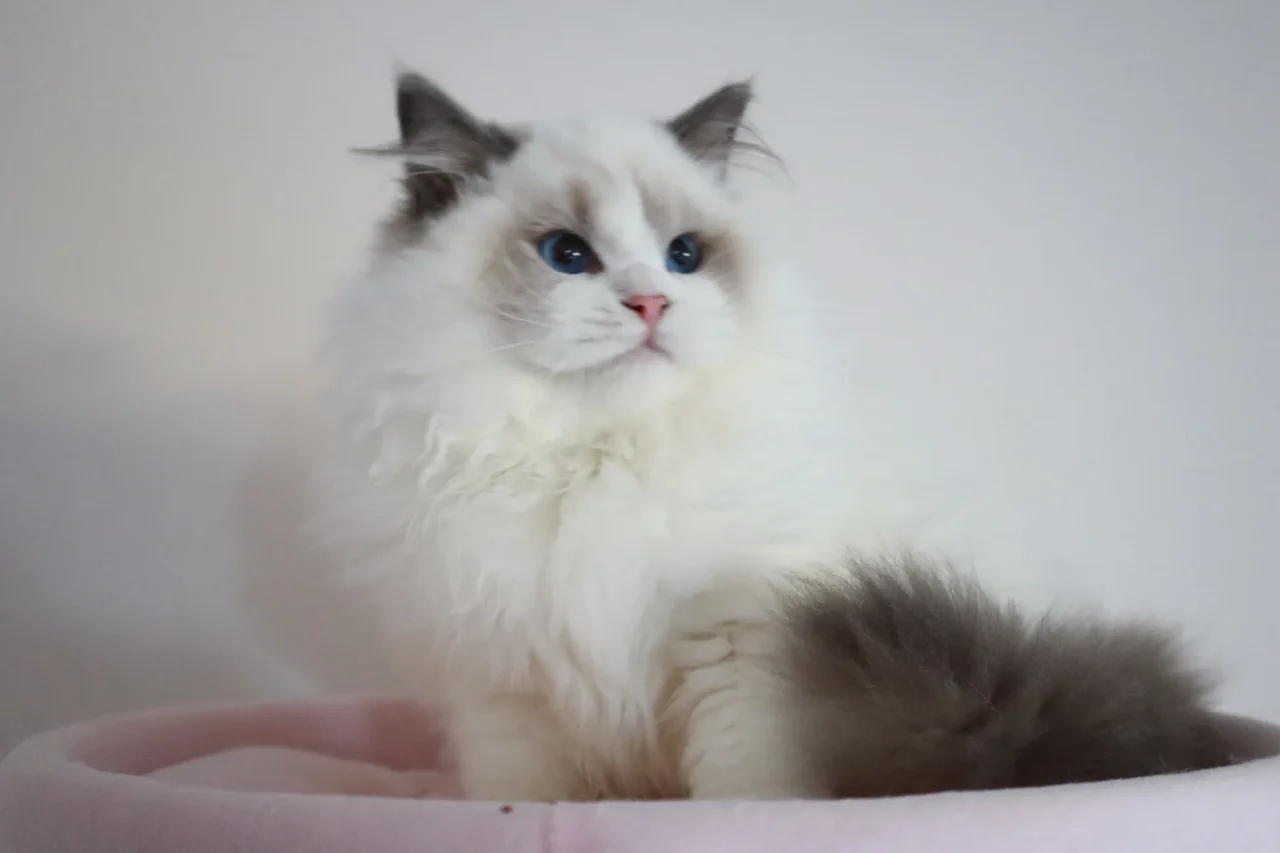

Ragdoll vs British Longhair: How to Choose (Singapore)
Ragdoll vs British Longhair? Compare size, coat, grooming, temperament and HDB suitability for Singapore homes to pick the right cat for you.
Choosing between a Ragdoll vs British Longhair comes down to how much daily company your cat will have and how much grooming time you can give. In a Singapore home, both are gentle, plush, HDB-friendly cats that thrive indoors in air-conditioning. The Ragdoll is larger, floppier and more openly needy; the British Longhair is a calmer, more self-contained companion that handles a full work day with grace. Neither is objectively “better” — the right one simply matches your lifestyle, and this guide walks you through every difference that actually matters here.
- Size: Ragdolls are big (4.5–9 kg); British Longhairs are medium and cobby (3.5–7 kg).
- Coat & grooming: Ragdolls are silky and single-coated (2–3 brushes weekly); British Longhairs are dense and double-coated (1–2 weekly, but heavier seasonal shedding).
- Temperament: Ragdolls follow you room to room; British Longhairs love you calmly from nearby.
- Home-alone: British Longhairs cope better with long solo hours; Ragdolls prefer company.
- Climate: Both need air-conditioning in Singapore; the double-coated British Longhair feels the heat a touch more.
- HDB: Both suit flats; the max is two cats per HDB home.
- Best pick: Busy solo households lean British Longhair; families home often lean Ragdoll.
In this article10 sections
- Ragdoll vs British Longhair: the fast answer
- Size, build & how they feel to hold
- Coat type, grooming & matting in a humid climate
- Temperament, activity & being left alone
- Ragdoll vs British Longhair at a glance
- Health, lifespan & what to screen for
- Living costs & day-to-day upkeep
- Which suits your Singapore home?
- Questions, answered
- Join the waitlist
Ragdoll vs British Longhair: the fast answer
Pick a British Longhair if your flat is empty for long stretches, you want a serene cat that entertains itself, and you prefer a compact teddy-bear look. Pick a Ragdoll if you are home often, you love a cat that flops into your arms and shadows you around the flat, and you do not mind slightly more brushing. Both are affectionate lap-friendly breeds — the difference is intensity, not warmth.
If you are also weighing the short-haired cousin, our British Shorthair vs Ragdoll comparison covers that pairing in full.
Size, build & how they feel to hold
The Ragdoll is one of the largest domestic cat breeds. Males can reach 9 kg and famously go limp when picked up — the trait that named them. That heft is lovely on the sofa but worth planning for: bigger litter tray, sturdier cat tree, more floor space.
The British Longhair is medium-sized with a rounded, cobby body, short thick legs and a broad face. It is the long-haired version of the British Shorthair, so it is dense and solid rather than lanky. In a smaller flat, its compact frame is easier to design around.
Both mature slowly, filling out over three to four years, so the kitten you meet will keep growing. If floor space and furniture footprint are tight, the medium British Longhair is the more forgiving fit; if you dream of a substantial cat that drapes across your lap, the Ragdoll delivers.
Coat type, grooming & matting in a humid climate
This is the difference most Singapore owners underestimate. The Ragdoll has a soft, silky, largely single coat with little undercoat, so it mats less than you would expect — two to three gentle brushes a week keeps the ruff, tummy and “knickerbockers” tangle-free.
The British Longhair carries a dense double coat. It needs fewer sessions week to week, but that undercoat sheds heavily in bursts and can pack into mats behind the ears and armpits if skipped. Humidity makes loose fur cling, so both breeds benefit from a steel comb, not just a brush.
It is tempting in Singapore’s humidity, but shaving a British Longhair (or a badly matted Ragdoll) removes the very coat that insulates against both heat and cold, and it often grows back patchy. Prevent mats with weekly combing and see a professional groomer for tough tangles instead of reaching for clippers.
Temperament, activity & being left alone
Ragdolls are famously people-oriented. They greet you at the door, follow you between rooms and want to be in the action — wonderful when someone is usually home, harder if the flat sits empty ten hours a day. They enjoy gentle interactive play but are rarely hyperactive.
British Longhairs are affectionate on their own terms. They love being in your orbit, will settle beside you, but are content to nap solo through a work day without fretting. They are quiet, low-drama cats that rarely demand attention loudly. For a busy solo professional, that independence is a real advantage.
Both are excellent with respectful children and other pets, which makes either a strong choice for a family flat. If temperament is your top priority, spend time with kittens from a well-run cattery before deciding.
Ragdoll vs British Longhair at a glance
| Factor | Ragdoll | British Longhair |
|---|---|---|
| Typical adult weight | 4.5–9 kg (large) | 3.5–7 kg (medium) |
| Coat | Silky, mostly single | Dense double coat |
| Grooming | 2–3 brushes / week | 1–2 / week, heavy seasonal sheds |
| Temperament | Needy, follows you, floppy | Calm, independent, affectionate nearby |
| Home-alone tolerance | Lower — prefers company | Higher — copes with long hours |
| Activity level | Low–moderate, loves gentle play | Low, placid |
| Typical lifespan | 12–17 years | 14–18 years |
| Heat tolerance (SG) | Needs aircon | Needs aircon (feels heat a touch more) |
| HDB-friendly | Yes (max 2 cats) | Yes (max 2 cats) |
Health, lifespan & what to screen for
Both breeds are generally robust, but each has one heritable condition worth checking. Ragdolls can carry hypertrophic cardiomyopathy (HCM), a heart-muscle disease. British Longhairs, sharing British bloodlines, can carry polycystic kidney disease (PKD). Responsible breeders DNA-test and cardiac-screen parents to reduce the risk.
At CatzillaSG we hand-select kittens only from registered breeders whose parent cats are HCM/PKD-screened, and every kitten carries a lifetime congenital health guarantee. Ragdolls typically live 12–17 years and British Longhairs 14–18, so either is a long, rewarding commitment. If you want the deeper care routines, see our British Shorthair care guide, which applies closely to the longhaired line too.
Living costs & day-to-day upkeep
Running costs are broadly similar for the two breeds, so this rarely decides the choice. Both eat a quality diet, benefit from annual vet checks, and appreciate a good scratching post and a couple of vertical perches. The one budget line that differs is grooming.
The larger Ragdoll eats a little more and needs a bigger litter tray, while the double-coated British Longhair may cost slightly more at the groomer during heavy shedding seasons. Neither is expensive to maintain once you have the basics. Set aside a modest monthly amount for food, litter and preventive care, and factor in pet insurance if you want cover for the heritable conditions below. For running-cost detail, our team can talk you through what to expect during a viewing.
Which suits your Singapore home?
For an HDB flat, both fit comfortably — remember the two-cat maximum per household. The cat licence stays free until 31 August 2026, after which it is a one-time S$35 per sterilised cat (a government licence fee, not a purchase cost). You can confirm the current rules directly with NParks AVS.
Match the cat to your routine. Out at work all day, quieter home, minimal fuss? The British Longhair. Home often, want a devoted shadow that melts into your lap? The Ragdoll. Explore both breeds in depth on our Ragdoll and British Longhair pages, or come meet them in person.
Questions, answered
Is a Ragdoll or British Longhair better for a first-time owner?
Both are forgiving, gentle and easy-going, which makes either a great first cat. If you work long hours, the more independent British Longhair is the safer bet. If someone is home most of the day and wants a very affectionate companion, the Ragdoll is ideal.
Which sheds more, a Ragdoll or a British Longhair?
The British Longhair generally sheds more overall because of its dense double coat, with heavier seasonal bursts. The Ragdoll’s single-layer coat sheds moderately and mats less than its length suggests. Weekly combing keeps loose fur down for both.
Are Ragdolls and British Longhairs good for HDB flats?
Yes. Both are calm indoor cats that adapt well to apartment living. HDB allows a maximum of two cats per flat, and both breeds are happy without outdoor access as long as they have air-conditioning, enrichment and a scratching post or two.
How big does each breed get?
Ragdolls are among the largest domestic breeds, with males often 6–9 kg and females 4.5–7 kg. British Longhairs are medium and cobby, usually 3.5–7 kg. If you want a genuinely big lap cat, the Ragdoll wins on sheer size.
Do they get along with children and other pets?
Both are known for patient, tolerant natures and mix well with respectful children, dogs and other cats. Ragdolls tend to seek out the family bustle, while British Longhairs join in on their own schedule. Early, gentle socialisation helps either settle fastest.
Which needs less grooming?
Week to week, the British Longhair often needs fewer sessions, but its undercoat demands thorough combing to prevent mats and produces bigger seasonal sheds. The Ragdoll needs slightly more frequent but simpler brushing. Neither is high-maintenance if you keep a regular routine.
Meet both breeds before you decide
The surest way to choose between a Ragdoll and a British Longhair is to spend time with each. Come and see how they feel to hold, cuddle and play with in person.